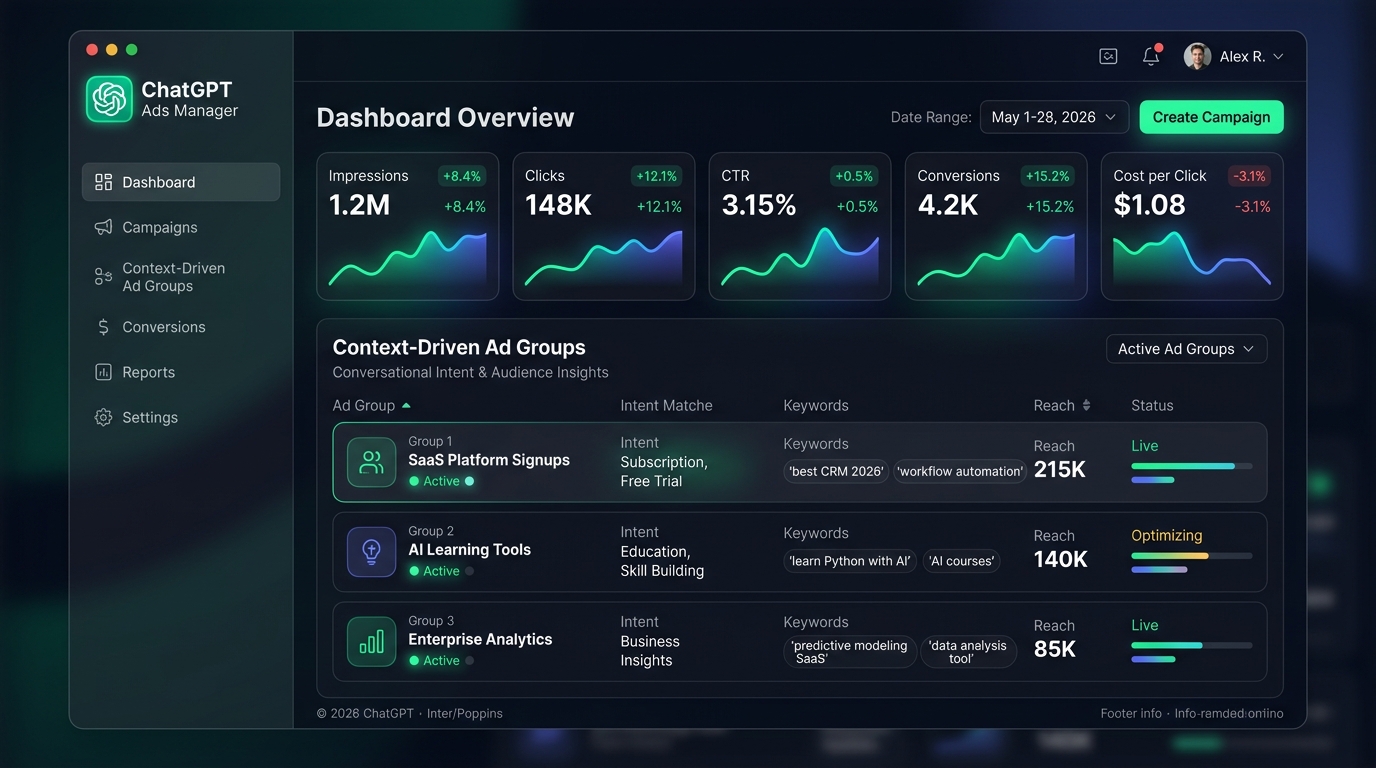
What Is ChatGPT Ads Manager?
For years, businesses have competed for attention on Google, Meta, YouTube, and other established advertising platforms. In 2026, another digital channel is becoming increasingly important: ChatGPT.
ChatGPT Ads Manager is OpenAI’s self-service advertising platform for businesses that want to purchase advertising placements within ChatGPT. Rolling out its beta self-serve Ads Manager in May 2026, the platform allows advertisers to create accounts, add payment information, establish campaign settings, upload advertising creative, launch campaigns, manage them, and review performance.
The move marks an important shift in digital advertising because people are no longer using AI only to search for information. They are using it to compare products, research services, evaluate alternatives, and decide what to buy. For marketers, this creates an entirely different advertising opportunity. Instead of competing only for a position on a traditional search results page, businesses can now explore advertising in an environment where users are already having a conversation about what they need.
OpenAI describes its advertising experience as separate from ChatGPT’s answers. Ads are clearly identified, while the AI-generated response remains independent of the advertisement. This distinction is crucial for maintaining user trust.
Why ChatGPT Ads Are Different from Traditional Search Advertising
Traditional search advertising is generally built around keywords. ChatGPT advertising operates in an environment where the user’s conversation can provide much richer context about their intent.
Consider a traditional Google search query: “best accounting software for a small business”. That query provides useful information, but it is still relatively short. Now imagine the same person talking to an AI assistant: “I run a small consulting company with five employees. I need accounting software that is easy to use, supports invoicing and doesn’t require an expensive enterprise plan.”
The second interaction provides much more context. The advertising environment is moving from simply understanding what someone typed to understanding the broader context of what someone is trying to accomplish. OpenAI says its advertising system uses richer context signals to make ads relevant while keeping advertisements separate from the answers generated by ChatGPT.
How ChatGPT Ads Manager Works
While the platform is still developing, the basic advertising workflow is familiar to performance marketers. A business can generally:
- Create an advertiser account.
- Set up a campaign.
- Define campaign objectives and budget.
- Add advertising creative.
- Configure available campaign settings.
- Launch the campaign.
- Monitor performance.
- Optimize the campaign based on results.
OpenAI has also introduced CPC (Cost Per Click) bidding as part of its expanding advertising platform. This is important because advertisers can begin thinking about ChatGPT not simply as an awareness channel, but as a measurable performance marketing environment.
ChatGPT Ads vs Google Ads
It would be too early to declare one platform the winner. Google Ads remains an established advertising ecosystem with years of advertiser data, sophisticated campaign controls, and a mature search advertising model. ChatGPT Ads represents a context-driven, AI-native conversational approach. Below is how the two compare:
| Factor | Google Ads | ChatGPT Ads |
|---|---|---|
| Core environment | Search results page | AI conversation |
| User interaction | Keyword query | Conversational prompt |
| Intent signals | Search query alone | Conversational context & intent |
| Advertising model | Mature & highly established | Emerging & developing |
| Keyword dependence | Strong keyword match types | Different / context-driven placement |
| AI-native experience | Limited (mostly search ads) | Core product experience |
| Best opportunity | Capture existing search demand | Reach users during deep consideration |
How Businesses Should Prepare for ChatGPT Advertising
Businesses interested in ChatGPT Ads should avoid jumping directly into paid campaigns without understanding their existing digital visibility. Start with these foundational pillars:
1. Audit your website
Make sure your website is technically healthy. Check your page titles, meta descriptions, headings, canonical tags, robots.txt, XML sitemap, broken links, image ALT text, page performance, Core Web Vitals, and indexing. Technical problems can undermine both traditional search visibility and your broader digital presence.
2. Understand your keyword positions
Identify the keywords that already generate visibility and business value. Don’t focus only on rankings; look at impressions, clicks, CTR, average position, ranking trends, competitor positions, and search intent.
3. Measure AI visibility
Ask AI systems questions related to your industry and record whether your brand appears, how often it appears, which competitors appear, what sources are cited, how your brand is described, and whether the sentiment is positive, neutral, or negative. This gives you a baseline before investing heavily in AI advertising.
4. Create content around real customer questions
AI search is conversational. Therefore, content strategy should become conversational as well. Instead of producing dozens of pages targeting slightly different keyword variations, build useful resources that answer the questions customers actually ask.
Weak: Writing a thin landing page targeting the keyword "Best SEO Software".
Strong: Creating authoritative guides answering questions like "What is the difference between SEO, AEO, and GEO?" or "How can a business measure whether ChatGPT recommends its brand?"
What Should Advertisers Measure?
Clicks alone should not determine whether ChatGPT advertising is successful. Businesses should establish a broader measurement framework of KPIs:
Assisted conversions are particularly important because AI conversations can happen earlier in the decision-making process, influencing users who convert later through other channels.
Connecting Ads, SEO, and AI Visibility
One of the biggest mistakes marketers could make is treating ChatGPT advertising as a replacement for SEO. It isn’t. Paid visibility and organic visibility serve different purposes. SEO helps a website build long-term organic visibility across search engines. AI Search Optimization (AISO) helps brands understand whether they are being mentioned, recommended, or cited by AI systems. Paid advertising provides another way to gain visibility in commercial conversations.
A modern search strategy involves three connected layers:
- Traditional SEO: Improve visibility across Google and traditional search engines.
- AI Search Optimization: Understand how frequently your brand appears across ChatGPT, Gemini, Claude, Perplexity, and Grok.
- AI Advertising: Use emerging advertising platforms such as ChatGPT Ads Manager to reach potential customers through paid placements.
This is where tools such as SEO AITracker help businesses look beyond traditional keyword rankings. SEO AITracker is designed to track traditional SEO performance while also monitoring brand visibility across multiple AI engines, including ChatGPT, Gemini, Claude, Perplexity, and Grok. Search is changing, and your visibility strategy should change with it.
Ensure your paid ads align with a strong organic brand presence. Track your organic citation rates, appearance frequency, and sentiment across ChatGPT and other engines. See how it works →
Sources
Keep reading
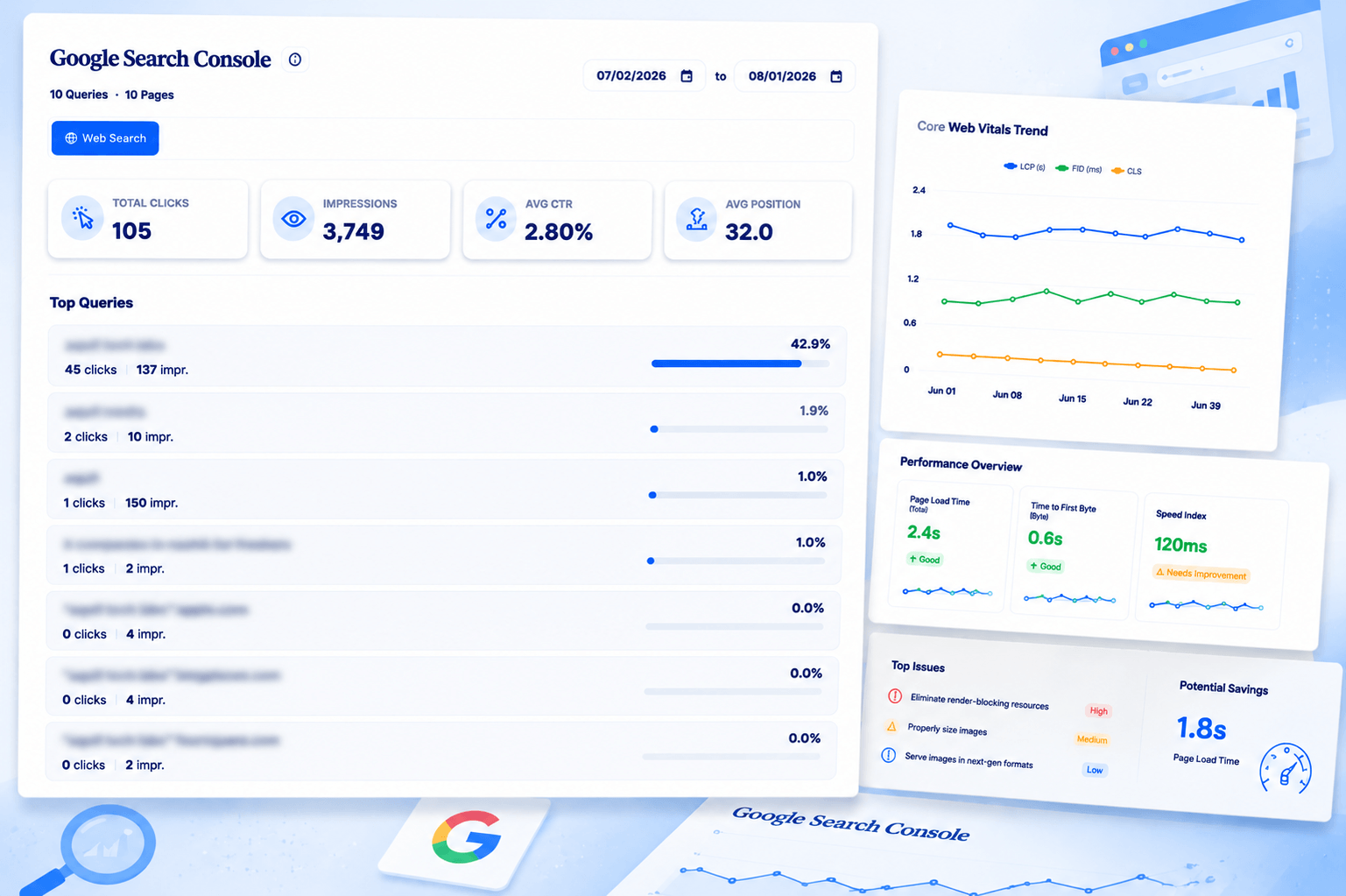
Zero-click search: how to measure SEO when nobody clicks
Roughly six in ten Google searches now end without a click, and AI Overviews cut clicks by up to 58% on the queries where they appear. Traffic is no longer a proxy for visibility — here is what to measure instead.
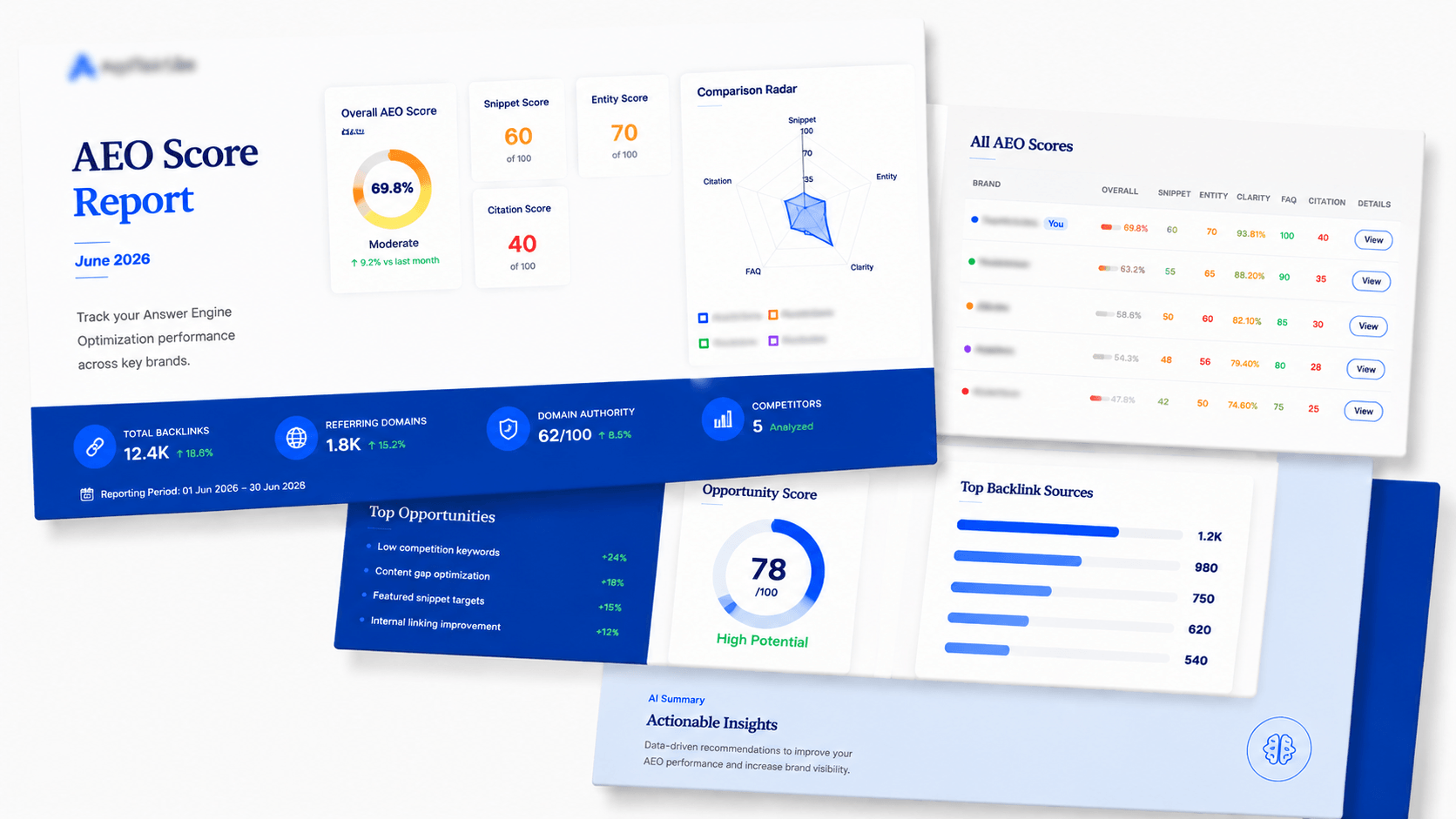
AEO, GEO, LLMO: which acronym actually needs a budget
Four new optimisation disciplines appeared in eighteen months, and most of the writing about them is definitional rather than useful. Here is what each one genuinely means, where they overlap, and which of them changes what you do on Monday.
Stop guessing at AI visibility
Track appearance rate, citations and competitor share of voice across seven AI engines — alongside your rankings and technical health.